

























Decisional load
Too many decisions converge on one person, without meaningful delegation.
● Within rangeOHA — Organizational Performance
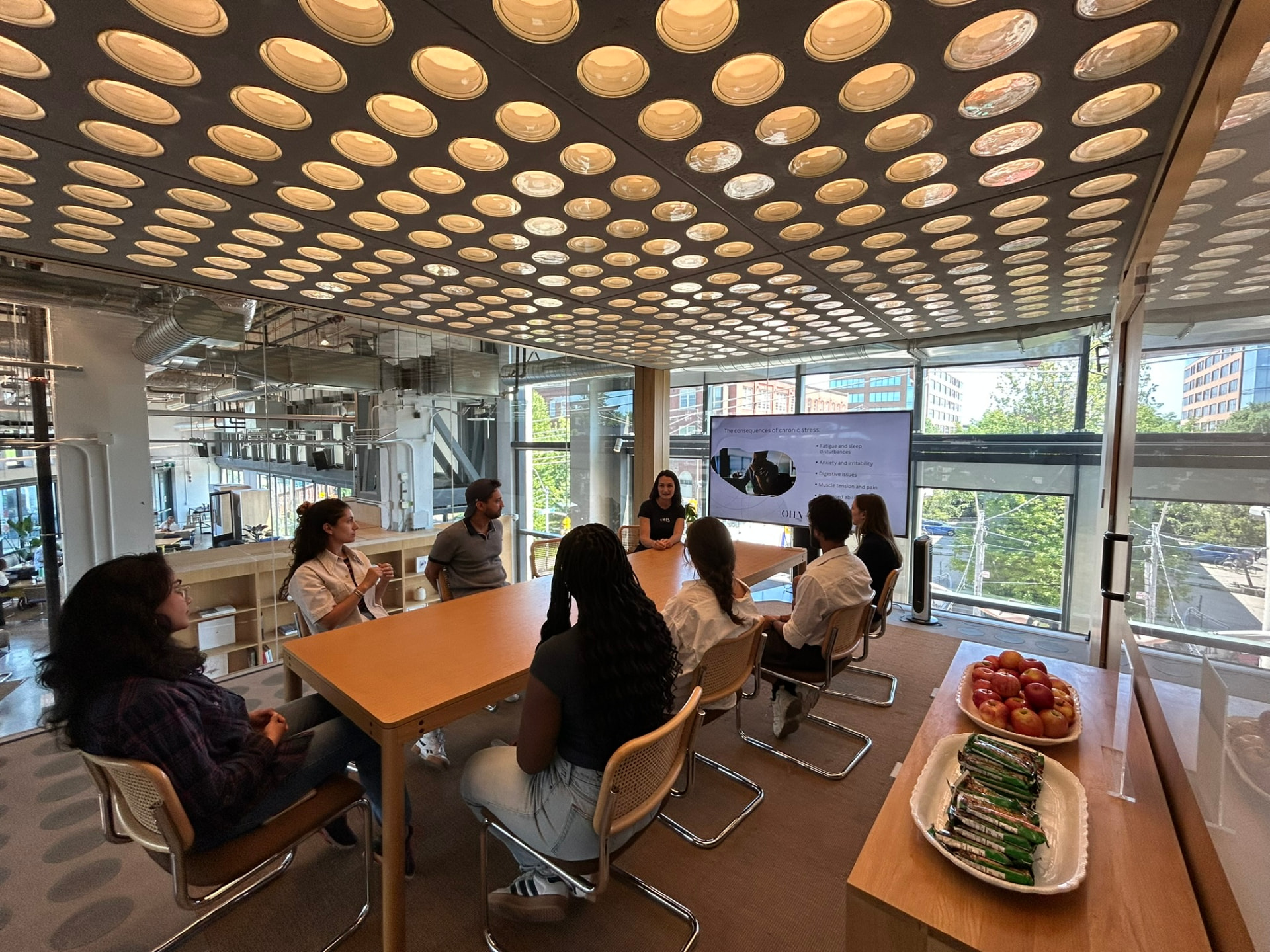
OHA supports organizations and their managers with leadership development, pressure management, and sustainable human performance programs.

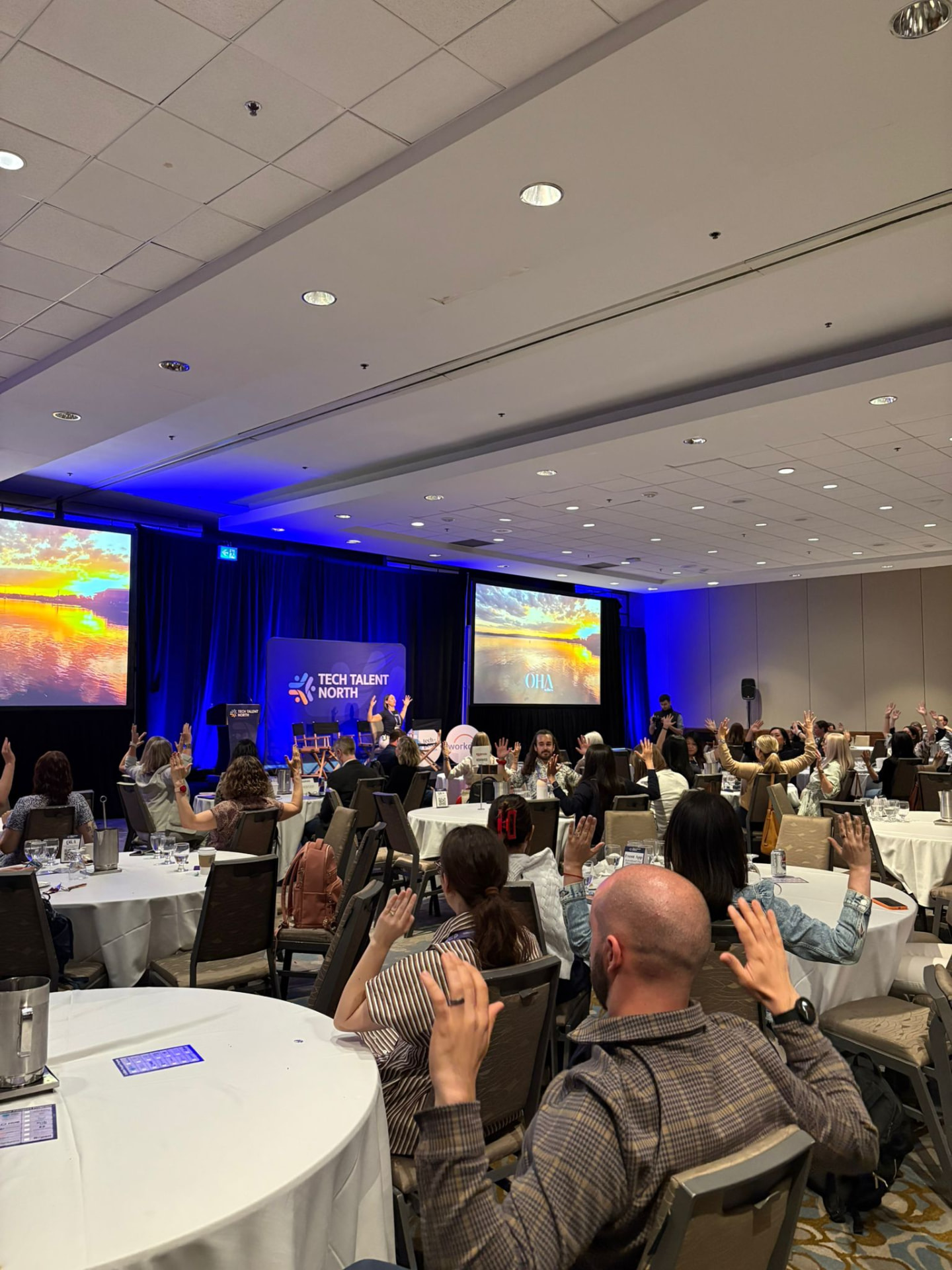
Leadership capacity programs trusted by 40+ organizations across North America since 2022


























The Category
It's the ability to decide well, communicate and adapt under pressure — year after year, without depending on chronic overload.
It isn't a wellbeing program added at the margins. It's a condition of organizational performance.
OHA measures the capacity of your managers and frontline teams, diagnoses the load consuming it, intervenes on it, then re-measures at 90 days.
You measure performance. But do you measure the capacity required to sustain it?
The Cycle, at a glance
Move through the cycle to see what happens at each stage — from the first baseline measurement to the 90-day re-measurement. Every OHA engagement runs this exact sequence.
Every engagement opens with a measured baseline of the participating managers or frontline employees — capacity, workload, retention risk — so there is a number to compare against 90 days later. No hypothesis, no assumption, no generic survey.
What we actually do
Every engagement opens with a measured baseline of the participating managers or frontline employees — capacity, workload, retention risk — so there is a number to compare against 90 days later. No hypothesis, no assumption, no generic survey.
What we actually do
Hover or select a stage to explore the cycle.
The Problem, In Business Terms
Managers shape the pace, decisions and retention of an entire team. When they can no longer absorb the pressure, the impact spreads — and weighs on the performance of the whole organization.
Manager engagement in North America fell from 31% to 22% between 2022 and 2025 — 9 points of recoverable capacity sitting in the layer that most influences retention.
Managers report more stress than the people they manage — and receive the least development investment. That gap is also the biggest opportunity: every dollar put into their capacity spreads to the whole team.
When a manager stays, their team stays. Replacing a manager costs on average twice their annual salary (Gallup) — strengthening the one you have protects the team and avoids that cost.
What consumes capacity
Capacity does not empty all at once — for managers and frontline employees alike, it is diluted across five distinct types of load. Each behaves differently, and each requires a different response.
Too many decisions converge on one person, without meaningful delegation.
● Within rangeFrequent context switching fragments attention across competing priorities.
▲ Elevated this weekIntensity rises and falls with team tension and unresolved conflict.
● Within rangeThe network of people to manage, coordinate and support grows dense.
● Within rangeRepetitive tasks and reporting accumulate outside the work that matters.
● Within rangePrograms
The Capacity Cycle isn't a single session. It's the method behind every program OHA runs, applied depending on where a company is starting.
A three-to-four week assessment that gives your leadership team a real baseline across the participating managers or frontline employees: where capacity, load and risk actually sit today, not where you assume they sit. You leave with a specific, budget-ready recommendation — not a slide deck of generic findings.
Starting at $3,500.
Book a Capacity DiagnosticOver 12 weeks, a cohort of managers moves through the full Capacity Cycle: live sessions, 1:1 or small-group coaching, and ongoing support through RESET+. The program closes with a re-measurement and an executive debrief — not a certificate of participation.
Ideal for organizations of 200+ employees where manager turnover or disengagement is already visible. Investment available on request.
Companies that see results typically extend the Cycle to their executive team, or into a standing annual partnership that runs it continuously. Ask once you have your first cohort's numbers.
See all programs →Questions We Get Asked
Look for decision avoidance, slower response to escalations, and managers absorbing work their team used to handle — those show up before absence or resignation does. Engagement surveys catch this late because they measure how people feel, not the load they are carrying. A capacity measurement separates the two, and repeating it at 90 days shows whether the load actually moved.
Strong managers rarely leave over pay. They leave when the load they carry stops being survivable — usually decisional and emotional load that nobody named. By the time an exit interview surfaces it, the decision was made months earlier.
Counting hours or meetings misses most of it. We measure five distinct loads — decisional, cognitive, emotional, relational and administrative — because each one requires a different response, and a team can be fine on volume while a single load is at breaking point. The measurement produces a baseline you can re-run.
Start with a baseline before anything is delivered, then re-measure the same instrument at 90 days so the change is a number, not an impression. Tie it to the costs your CFO already tracks — replacing one manager typically runs six to nine months of salary, and short-term disability leaves are recorded. Attendance and satisfaction scores don't survive that conversation; a measured shift against a baseline does.
Human capacity is the load a person can carry while still performing well. It isn't fixed — it rises and falls with the load an organization places on people.
Managers are the transmission point for pace, decisions and retention. When their capacity erodes, the whole team's performance drops with it.
We measure a baseline of manager capacity and load, diagnose the dominant load, intervene, and re-measure the same instrument at 90 days.
Wellness providers report participation. OHA measures capacity, intervenes on load, and reports a change against a baseline at 90 days.
Name the specific load the change adds — usually decisional and emotional, rarely volume — instead of offering general support. Give managers practices they can use inside the real work of that week, and measure the effect at 90 days rather than assuming it. Managers carry the change for their whole team, so they need the load named first.
Usually a combination of five loads — decisional, cognitive, emotional, relational and administrative — rather than simple volume.
Identify the load driving exit before people leave. Measuring capacity gives a leading indicator exit interviews can't.
Yes — cohort programs for managers and leaders, each preceded by a Capacity Diagnostic and followed by a 90-day re-measurement.
OHA is based in Toronto and works across the GTA, Ontario, Canada and North America, onsite, virtually or hybrid.
Start with the load, not the exhaustion. A leader most often carries decisional and emotional load that no one above them sees. The five-load measurement identifies which one dominates, and the 90-day re-measurement says whether an intervention actually moved it — not whether you felt better after a vacation.
The signs arrive before the effect on the team: decisions that drag, escalations you avoid, work you take back instead of delegating. The capacity measurement separates your load from how you feel — a leader can feel fine and carry an unsustainable load. It's the same instrument we run for managers, re-measured at 90 days.
A conflict that persists is almost always relational load that has hardened, not a personality problem. Measure it the way you measure the other loads, intervene on the specific relational load, and re-measure at 90 days. Generic mediation doesn't hold; a load that's named and measured does.
A layoff adds emotional and relational load to the whole team, not just the person leaving. Measure the load before the announcement, give managers practices for the real work of that week, and re-measure at 90 days to know whether the team held — assuming it held isn't enough.
Adoption stalls when the change adds decisional load no one measured. Diagnose the specific load the change imposes, intervene on it, and re-measure at 90 days. Communication plans don't move an unmeasured load.
New targets add cognitive and decisional load before they add performance. Measure which load climbs, intervene on that specific load, and re-measure at 90 days so performance stays a number, not an impression. A team can hold the volume and break on a single load.