Corporate wellness programs: choose by what they measure
Choose a corporate wellness program by what it measures: a baseline, a named load, managers involved, a remeasure and a report leadership can use.
OHA Team, OHA Wellness
Published · Updated · Practice · 6 min
The short answer
Ask what the provider measures before, during and after. A program with a baseline, a named load to act on, managers involved, a remeasure and a report for leadership gives you something to decide from.
On this page
To choose a corporate wellness program in Canada, look past what employees do on the day and ask what the provider measures before, during and after. A program that measures nothing can be attended, enjoyed and forgotten; one that starts from a baseline and returns to it gives you a result you can take to leadership.
The pressure behind the purchase is real. Gallup's 2026 regional figures, which report the United States and Canada together, show 50% of employees experiencing daily stress, the highest of any region. A wellness budget is asked to answer that, so it helps to know what a program should be able to show for itself.
What makes a wellness program change something?
A program that changes something has five marks, and each can be checked before you sign. It starts from a baseline, a measurement of the team or population before anything is delivered. It names one load or problem to act on instead of offering wellness in general. It involves managers, who shape much of what a team's week looks like. It measures again on a fixed date. And it ends in a report that leadership can read and decide from.
The baseline is where OHA starts: the Capacity Diagnostic measures the Five Loads (decisional, cognitive, emotional, relational and administrative) so the work is aimed at the load that dominates.
None of this is exotic. The World Health Organization's 2010 healthy workplace model describes a continual improvement process that includes assessing, planning, doing and evaluating, with leadership engagement and worker involvement at its centre, and advises clearly stated, measurable goals for each part of a plan so that evaluation is easier. WHO's 2022 guidelines on mental health at work add that work-related risk factors should be assessed when planning an organizational intervention, and strongly recommend training managers to support their workers' mental health, on moderate-certainty evidence.
Does attendance show that a wellness program worked?
Attendance tells you that people came, not that anything changed. A randomized trial published in JAMA in 2019 tested a workplace wellness program at 160 worksites of a US retail company, with 32,974 employees. After 18 months, employees at program sites reported more regular exercise (69.8% against 61.9%) and more active weight management (69.2% against 54.7%). The program had no significant effects on absenteeism, job tenure or job performance.
That was a US employer and a lifestyle-focused program, so read it as a caution about what to measure, not as a verdict on every program. A program can move the habits it targets without a significant effect on the outcomes leadership cares about, and you will only know which happened if the provider measures both.
Uptake is its own question. A 2025 meta-review of digital workplace wellness programs in the Journal of Medical Internet Research cites an average uptake of 11% for mental health programs, from two studies in one review, and links low uptake to fear of stigma and a wish to keep health separate from work. Ask any provider how many people it reached, and who it did not.
Where do wellness sessions fit in a program?
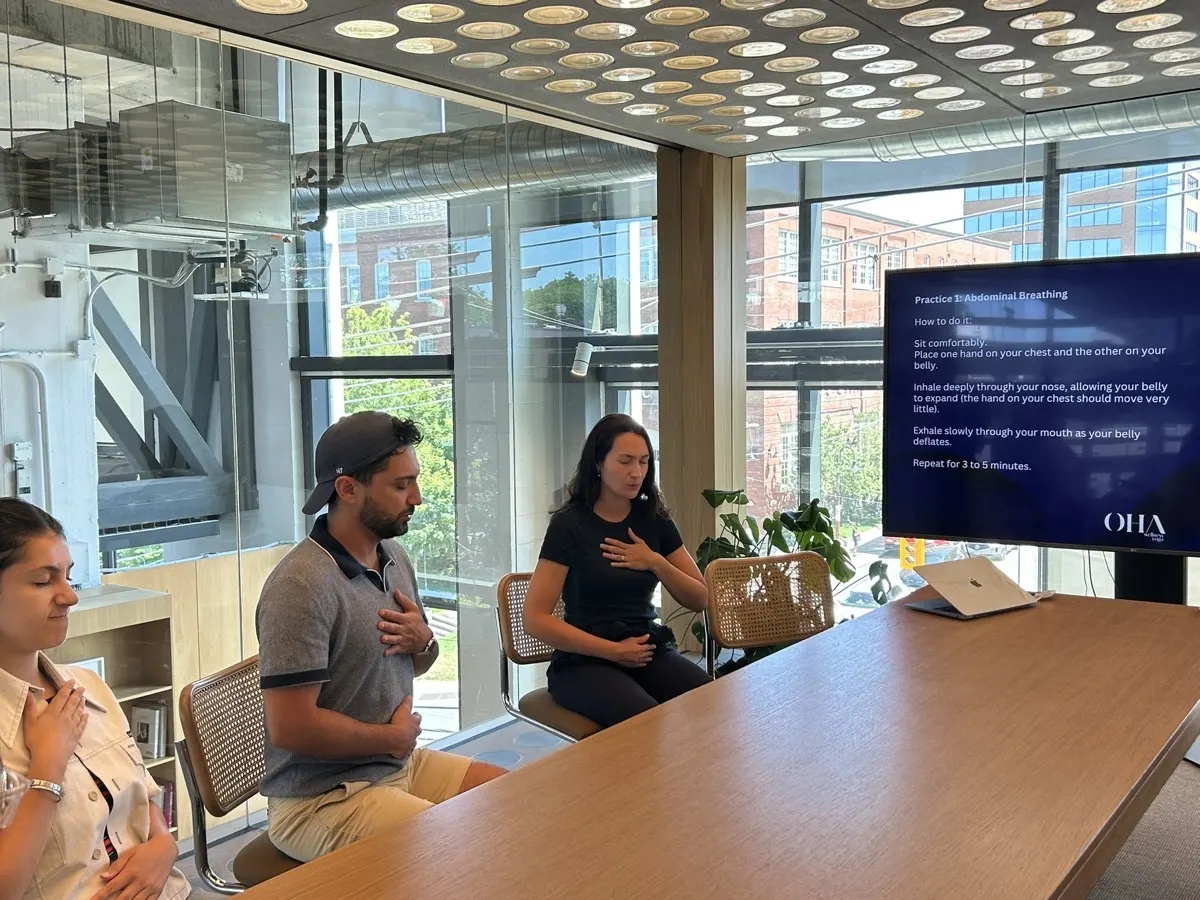
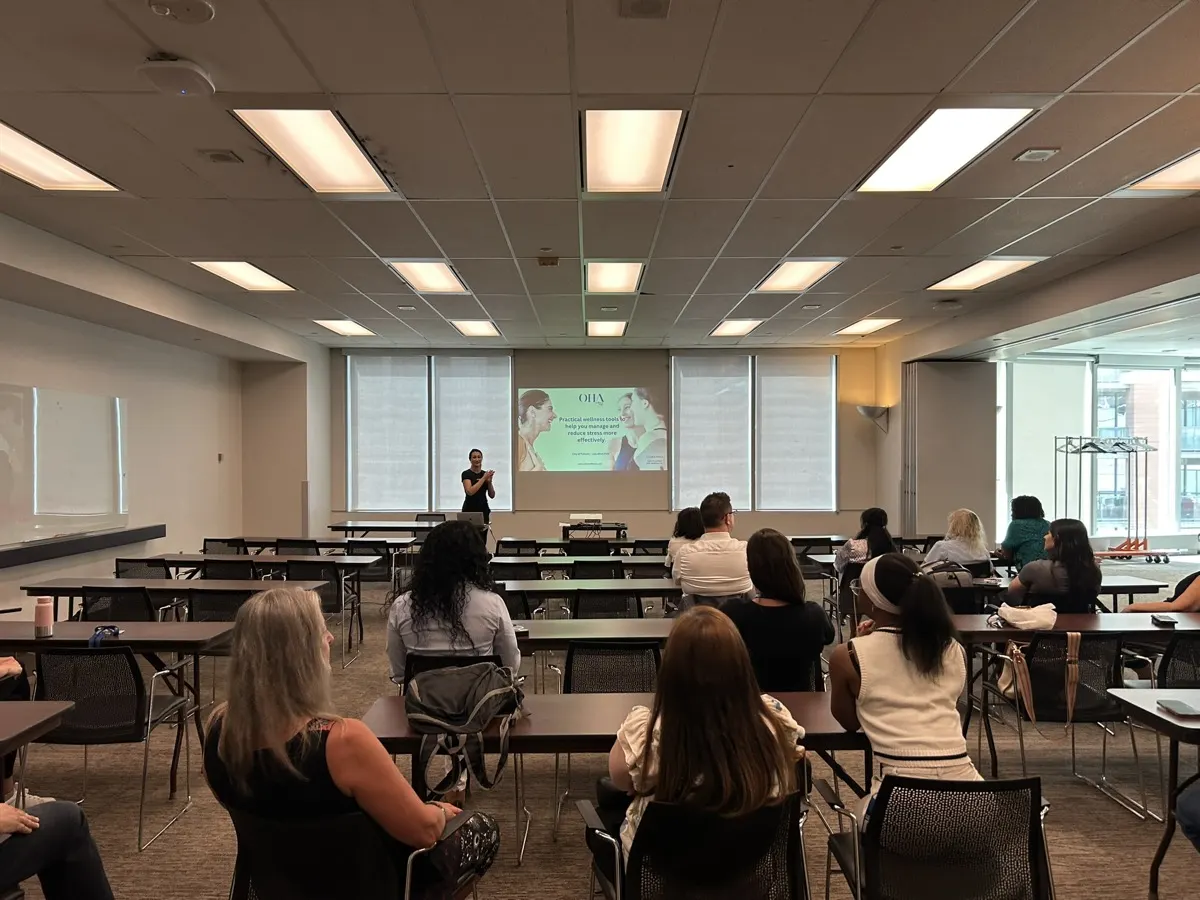
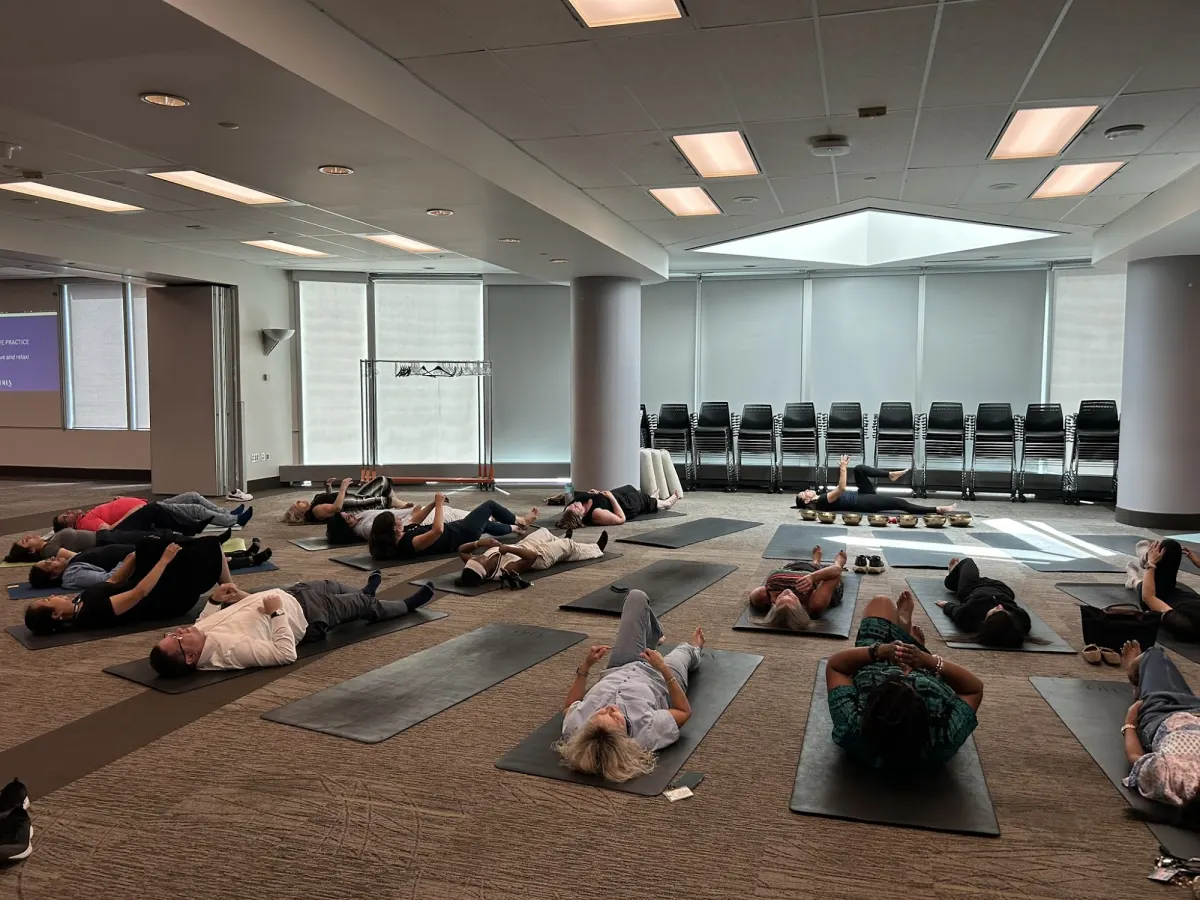
Sessions are a valid place to start. A wellness session or workshop gives a whole team a real pause, run at your workplace, virtually or at OHA's Toronto space, and it is often the first contact between an organization and a provider. OHA runs them, as set out for corporate wellness sessions in Toronto.
A session delivers the pause itself. The question of what changed in how the work runs is answered by a second step: a baseline before and a remeasure after. The two work together, sessions for the shared pause and a measured program for the load behind it.
WHO's 2026 fact sheet on mental health at work points the same way. It recommends that employers use organizational interventions that directly target working conditions, and manager training for mental health, among other measures.
What should you ask a provider before you sign?
Ask what the provider measures first, which load or problem the program targets, what managers are asked to do, when it measures again and what the report contains. The Canadian Centre for Occupational Health and Safety says interventions that address the source of a hazard are prioritized, favours measures that can affect the whole organization, and advises making clear who is responsible for each part and setting a timeline of milestones for it.
A good provider will answer in writing before the contract, with a scope, a measurement plan and dates. If the answers are about activities and satisfaction scores, ask what was measured before and after. To start from the hazards instead, see how psychosocial hazards show up in a team's week.
The checklist below turns this into eight questions to tick for each program you are comparing, with a reading at the end.
Checklist · 2 minutes
Questions to ask before you sign with a provider
Tick each statement that is true of a program you are considering; each one is a question to put to the provider before you sign.
0 of 8 ticked
What should a report to leadership contain?
It should show what was measured at the start, what the program targeted, what was done, what was measured again and what comes next, with the same instrument at both ends so the two numbers can be compared. A satisfaction score alone cannot do that.
WHO's 2010 model calls evaluation essential to see what is working and what is not, and why, and says both the process and the outcomes should be evaluated, in the short and the long term. Its 2026 fact sheet lists leadership commitment, sufficient funds and resources, and the participation of workers in decisions as parts of an enabling environment.
A flat result is also information. It tells you the load the program targeted was not the one consuming capacity, and the next cycle can aim elsewhere.
What OHA does about this
OHA's work starts with a Capacity Diagnostic built to measure the Five Loads and name the one that dominates, then acts on it with managers over a 90-day Capacity Circle™ and measures again with the same instrument, so the report you take to leadership rests on a before and an after. Sessions remain a valid first step. To see how the year is built, read how sustainable human performance works.
Sources
- Gallup, State of the Global Workplace 2026: Regional and Country Data, April 2026 (2025 data; the United States and Canada are reported together).
- World Health Organization, Healthy workplaces: a model for action, 2010.
- World Health Organization, Guidelines on mental health at work, 28 September 2022.
- JAMA (Song and Baicker), Effect of a Workplace Wellness Program on Employee Health and Economic Outcomes, 2019 (randomized clinical trial, United States).
- Journal of Medical Internet Research (Amirabdolahian, Pare and Tams), Digital Wellness Programs in the Workplace: Meta-Review, 14 March 2025.
- World Health Organization, Mental health at work (fact sheet), 15 September 2026.
- Canadian Centre for Occupational Health and Safety, Psychological Health and Safety Program - Controlling Psychosocial Hazards, 2022.