
Employee workload management: five signs your team is overloaded
Employee workload management starts with finding which kind of demand is overloading the team. Five signs you can see this week, and a short check to name the load.
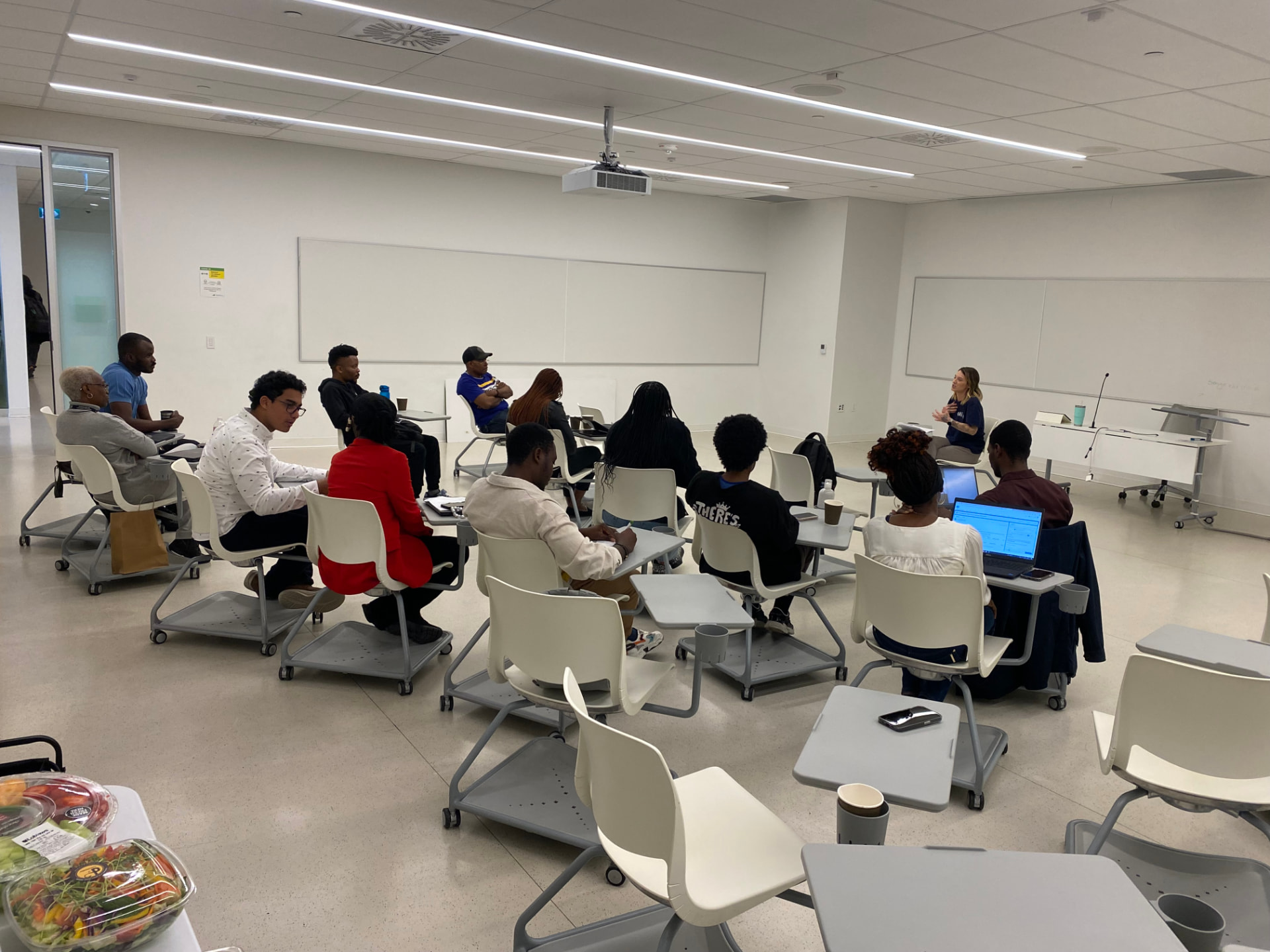
Employee workload management starts with finding out which kind of demand is overloading the team, because cutting tasks at random rarely lightens it. A manager can see the early signs this week, in calendars, in the shape of decisions and in where the real work gets done.
The scale is not small. In April 2023, Statistics Canada found that 21.2% of employed Canadians, about 4.1 million people, reported high or very high work-related stress, and heavy workloads were the most common source, affecting 23.7% of employed people. If your team feels stretched, you are in large company.
What is work overload, and how is it different from a busy quarter?
Work overload is the sustained sense of having more to do than the time, attention and energy available. A busy quarter ends and people recover; overload is when the demand keeps outrunning the capacity to recover. Quebec's workplace health and safety body, the CNESST, describes high workload, or overload, as a risk factor present in every workplace, and defines it by the impression of having too much to do.
That definition matters for a manager. The feeling is not a complaint to be argued with. It is information about the gap between what the role asks and what a person can hold, and it can be read in the work before it is said out loud.
Two things separate overload from ordinary pressure. It lasts for weeks, not days. And effort does not clear it: the person works harder and the pile does not shrink. A useful test is whether the extra hours are buying anything. If a week of evenings has not moved the backlog, you are probably looking at overload rather than a peak.
What are the signs your team is overloaded?
Look for five things. Each one maps to a load in the Five Loads framework. Decisions that are delayed or reopened point to decisional load. Real work that only moves in the evenings, or errors in tasks someone has done a hundred times, point to cognitive load. A manager who has gone quiet with the team, or who avoids the hard conversation, may be carrying emotional load. One-on-ones that have turned into status updates, and a team waiting on one person's input, point to relational load. Approval queues owned by one person, and the same figures entered in two systems, point to administrative load.
Read the pattern across the five, not any one sign. The Five Loads give you a better question than "is everyone busy?": which load is it?
The check below takes about a minute. It uses five of the ten statements in OHA's capacity self-portrait, one for each load, so you see all five side by side.
Five Loads quick check · 1 minute
Find the load consuming your team's capacity.
Five statements, about a minute. See all five loads side by side. Answer for your own week, or for the team you manage: how often is each of these true?
Statement 1 of 5
Why is overload usually a design problem rather than a people problem?
The World Health Organization describes burn-out as a syndrome resulting from chronic workplace stress that has not been successfully managed, and states that it is an occupational phenomenon, not a medical condition. The word to notice is managed. The cause sits in the workplace, so the response has to include the work itself.
A resilience workshop teaches people to carry a load. It does not remove an approval step, merge two reports or move a decision to the person who should own it. Both can be useful. Only one changes what the job demands, and that is the part a manager can often move this quarter. A resilience workshop is part of our approach to workplace stress only after the load is named.
What should a manager do first about employee workload?
Pick one load, not five. Use the check to see which reads highest, then choose one structural change that fits it. For cognitive load, protect two blocks of uninterrupted time in the week and cut the recurring meetings that end without a decision. For decisional load, write down who decides what, and when a decision may be reopened. For administrative load, list every report and approval the role carries and remove or reassign one.
Then fix a date. Run the same statements again in about ninety days, the length of OHA's Capacity Cycle, so the comparison is like for like. These steps are designed to help, and a flat score is also information: it tells you the change you made was not the one consuming capacity.
Tell the team what you are changing and why, in one sentence, before you change it. People under load read silence as more load coming. A named change, a named date and a promise to look at the same statements again is a small act of predictability, and predictability is often the first thing an overloaded team has lost.
What if you are the overloaded one?
Gallup's State of the Global Workplace 2026 report puts global manager engagement at 22% in 2025, down from 31% in 2022, and finds that, globally, leaders are more likely than individual contributors to report a lot of stress the previous day, by seven points. Managers carry their own load while they read their team's. For why manager burnout compounds quietly, see the related post.
A manager in that position often cannot see the team's overload, because the same signs are showing up in their own calendar. Ask a peer or your HR partner to answer the check for you, or run it together. Naming the load is a smaller step than fixing it, and it is the one that makes the next step visible.
What OHA does about this
OHA's Capacity Diagnostic measures the five loads across a team, shows which one dominates in each function, and measures them again at 90 days with the same instrument, so the conversation about what changed rests on the numbers that started it. The work that follows is built around the load the diagnostic names, not around a generic program. If this post described your team, see how we support managers under pressure.
Book a Capacity DiagnosticSources
- Statistics Canada, Work-related stress most often caused by heavy workloads and work-life balance, The Daily, 19 June 2023.
- CNESST, Facteurs de risques psychosociaux liés au travail, n.d. (page in French).
- World Health Organization, Burn-out an "occupational phenomenon": International Classification of Diseases, 28 May 2019.
- Gallup, State of the Global Workplace: 2026 Report, 2026 (2025 data).