Do employee wellness programs work? What the evidence shows
Partly. Wellness programs change some habits and screening rates, but two large US trials found no significant effect on spending, absence or performance. The evidence points to the work itself.
OHA Team, OHA Wellness
Published · Updated · Research · 6 min

The short answer
Partly. Randomized trials of broad wellness programs found changes in some self-reported habits and in screening, and no significant effect on medical spending, absence or performance. A 2007 review of job-stress interventions found that interventions aimed at the organization benefited both people and the organization.
On this page
Employee wellness programs work for some things and not for others. Two large randomized trials in the US found changes in some habits employees report and in screening, and no significant effect on medical spending, absence or job performance; research that looks at the work itself points to a different lever.
This post is for the executive or HR leader deciding what to fund. It covers what a program is, what the trials found, why programs aimed at individuals move so little when the workload does not change, and what to put in place so a program can be judged.
What is a wellness program?
It is any structured effort by an employer to support employees' health and wellbeing, and in practice it falls into five types, often mixed. An employee assistance program offers confidential counselling and referrals. Benefits coverage pays for care such as therapy or medication. Health promotion offers screenings, challenges and education on sleep, activity or nutrition. Activities and sessions give a team a pause: a workshop, a breathwork or movement class, a sound session, a chair massage. Organizational changes act on the work itself: workload, schedules, approvals and how managers lead.
The first four act on individuals. Only the fifth changes the conditions people work in, and that difference runs through the evidence below. Our post on what an employee assistance program covers sets out the first type in detail.
Do employee wellness programs work?
Partly: they change some behaviours and screening rates, and two large US randomized trials found no significant effect on spending, absence or job performance. A large randomized trial covered 160 worksites of a US retail company and was published in JAMA in 2019. After 18 months, more employees in the program group reported exercising regularly (69.8% against 61.9%) and managing their weight (69.2% against 54.7%). There were no significant differences in clinical health measures, health care spending and use, or employment outcomes.
The Illinois Workplace Wellness Study, published in the Quarterly Journal of Economics the same year, randomly assigned a program to close to 5,000 employees of a large employer. The program raised screening rates. Over more than two years of follow-up, the authors found no significant effect on total medical spending, other health behaviours, productivity or self-reported health. They also found that participants had lower medical spending and healthier behaviours than non-participants before the program began, which is why studies that compare only participants with non-participants can flatter a program.
Both are US trials of broad health-promotion programs. They do not show that every program fails, and a program built around mental health is a different question, taken up next.
Why do individual programs show small effects?
Because they help the person without changing what the work asks of them. A 2007 systematic review of 90 job-stress intervention evaluations found that interventions aimed only at individuals improved outcomes for those individuals but generally did not show favourable effects at the organizational level, while interventions aimed at the organization benefited both.
That is not an argument against individual help. A 2016 meta-review of workplace interventions for depression and anxiety, covering 20 reviews of moderate or high quality, found moderate evidence for two prevention approaches, giving employees more control over their work and promoting physical activity, and it also found evidence for CBT-based stress management. A 2025 meta-analysis of 99 randomized trials with 16,054 participants found that mindfulness programs, studied in academic and workplace settings together, improved task performance compared with a passive control group, a small effect, but not compared with an active control group, and it rated its confidence in the results very low.
Read together, the evidence supports individual help for the people who use it. It says little for a session as the fix for a team whose workload is the problem. A resilience workshop does not remove an unnecessary approval step from a job.
Five Loads quick check · 1 minute
Find the load consuming your team's capacity.
Five statements, about a minute. See all five loads side by side. Before you judge a program, look at the work around it. Answer for your own week or your team's: how often is each of these true?
Statement 1 of 5
What are examples of wellness programs, and what can each do?
Each type does a different job, and none does all of them. An employee assistance program and benefits coverage are the response layer: they help people who are already struggling, and sit alongside the work, not in place of changing it. Health promotion, such as a steps challenge or a screening day, is the type the trials above tested. Its effects are on habits and screening, not on spending.
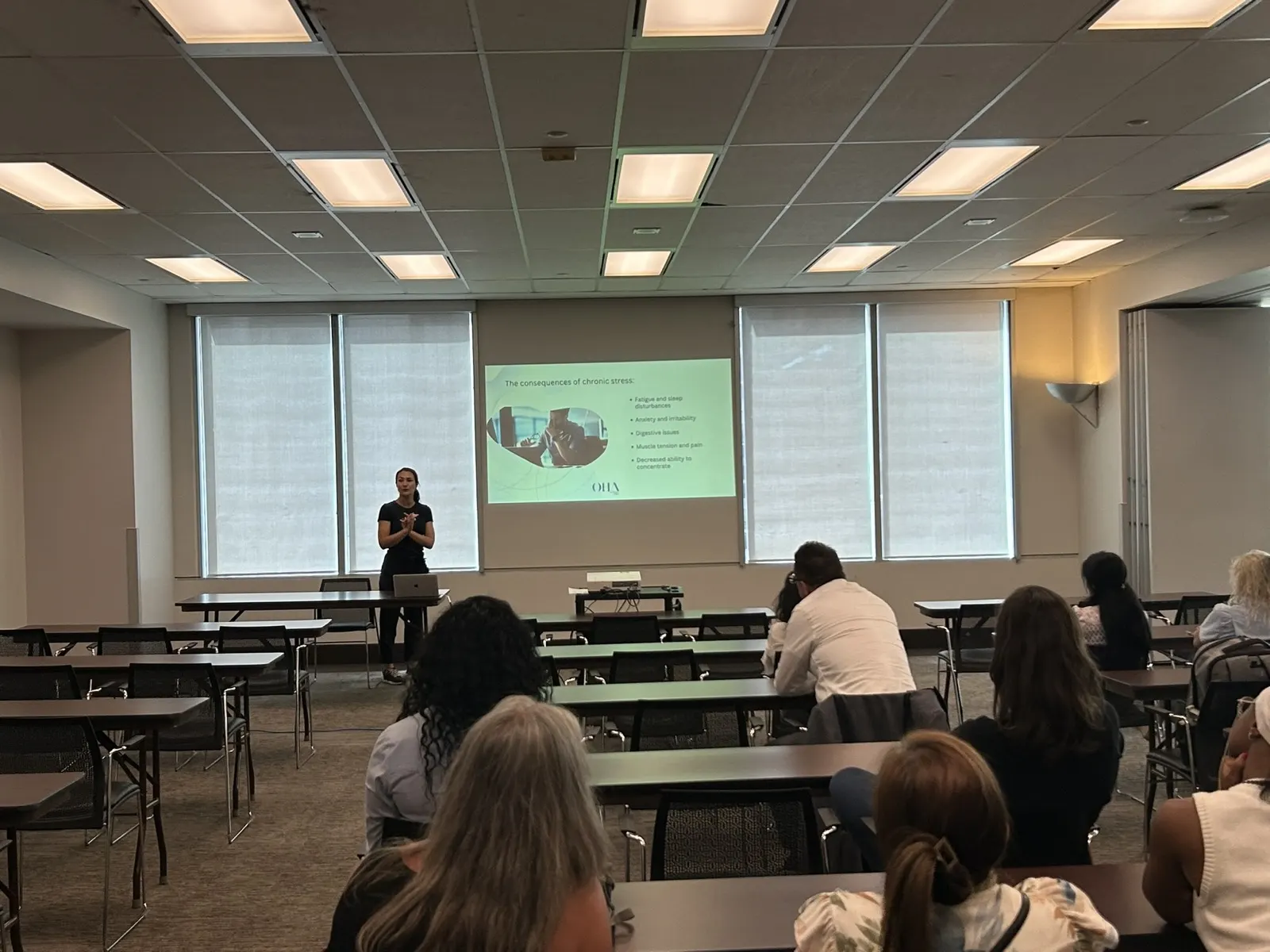
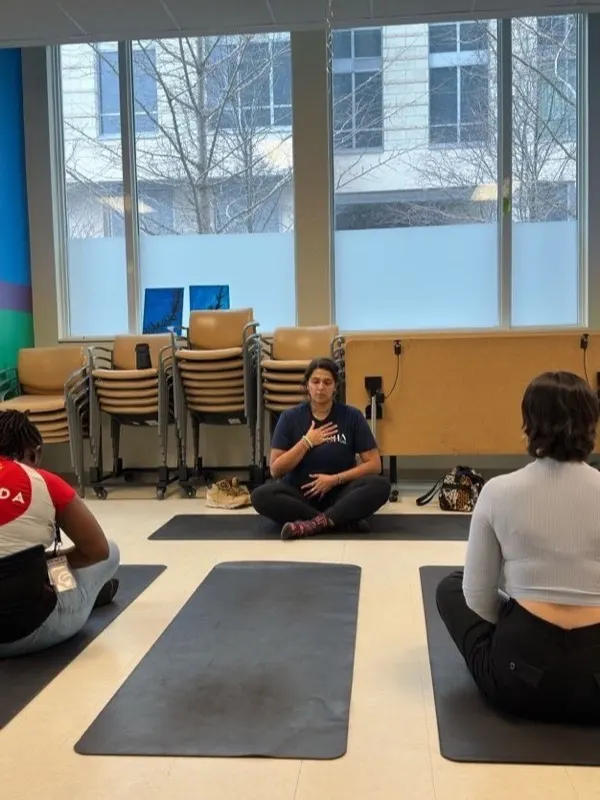
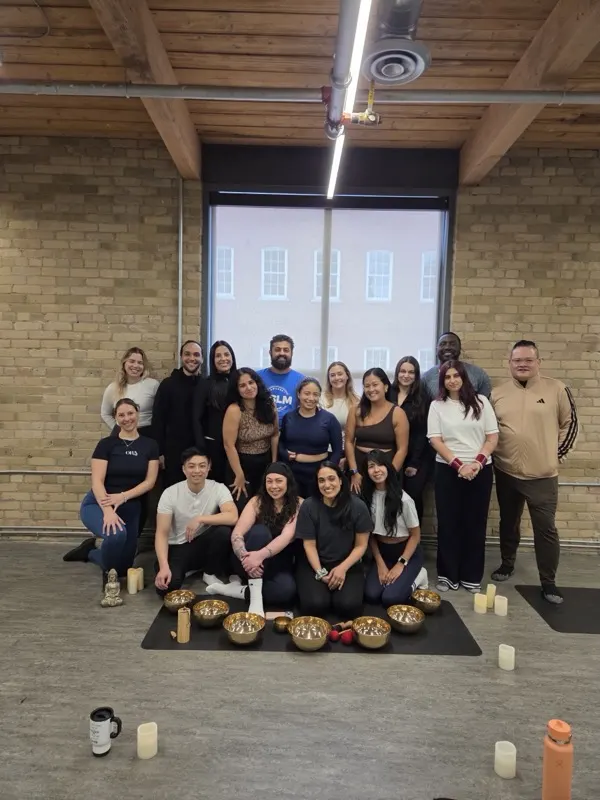
Sessions give a team a real pause and are the part people feel at once. OHA leads wellness days of a half day or a full day, built from sessions such as chair massage, a sound bath, yoga, breathwork and a workshop, in English or French; see wellness days for employees. They are worth funding for what they are, a shared break, and worth judging by that measure. Organizational changes are the type that act on the cause: fewer approvals, clearer decisions, protected time, a different meeting rhythm. They are also the type most programs leave out.
What makes a wellness program work?
Measure first, act on the work with managers, then measure again. The World Health Organization describes organizational interventions as measures that assess, and then mitigate, modify or remove workplace risks to mental health, and lists flexible working arrangements and frameworks for dealing with violence and harassment among its examples. That sequence is the test to put to any program, including OHA's: what was measured at the start, what changed in the work, what was measured again.
Two habits follow. Ask for the outcome you care about, such as a change in the load people carry, not for the number who attended. And pair individual support with one change to the work, owned by a manager. Our comparison of mental wellness programs beyond the EAP shows how the layers fit together.
What OHA does about this
OHA offers two things. Wellness sessions give a team a real pause, led in your office or a venue you book. Sustainable human performance starts with a Capacity Diagnostic, built to measure the Five Loads, and runs 90-day cycles designed to help leaders act on the load that weighs most, then measures again at day 90, so the result is a comparison and not an attendance figure. See OHA's sustainable human performance work.
Sources
- JAMA, Effect of a Workplace Wellness Program on Employee Health and Economic..., 2019 (US trial, 160 worksites).
- The Quarterly Journal of Economics, What do Workplace Wellness Programs do? Evidence from the Illinois..., 2019 (US trial).
- International Journal of Occupational and Environmental Health, A systematic review of the job-stress intervention evaluation literature..., 2007 (literature 1990 to 2005).
- Psychological Medicine, Workplace interventions for common mental disorders: a systematic meta-review, 2016.
- Stress and Health, Mindfulness-Based Programmes for Work Performance: A Systematic Review..., 2025.
- World Health Organization, Mental health at work, fact sheet, 15 September 2026.