Workplace wellness that lasts: four layers and a one-month start
Workplace wellness works at four layers: sessions people attend, programs and benefits, how work is designed, and how managers lead.
OHA Team, OHA Wellness
Published · Updated · Practice · 6 min
The short answer
Workplace wellness is what an employer does to support the health of its people at work, across four layers: sessions people attend, programs and benefits, how the work is designed, and how managers lead.
On this page
Workplace wellness is what an employer does, across four layers, to support the health of the people who work for it: sessions they attend, programs and benefits, how the work is designed, and how managers lead. Among the World Health Organization's recommendations on mental health at work are four that run along similar lines: changes to working conditions, manager training, worker training and interventions for individuals.
The stress figures point further down than the layer that is easiest to buy. In Statistics Canada's April 2023 survey of employed people aged 15 to 69, 21.2% reported high or very high work-related stress, and a heavy workload was the cause named most often, by 23.7%. This guide maps the four layers, what each can and cannot do, and how to start in a month.
What is workplace wellness?
Workplace wellness is the set of things an employer does to protect and support the health of its people at work, and in OHA's reading it sits in four layers. Sessions are shared experiences at work: a breathing session, a workshop, a lunch and learn. Programs and benefits are the standing supports: an employee assistance program (EAP), benefits coverage, a series of sessions through the year. Work design is workload, recovery time, decisions and approvals. Manager practice is how the people who lead teams handle load, hard conversations and absence.
Among the recommendations in the WHO fact sheet on mental health at work are four kinds of action: organizational interventions that assess, then mitigate, modify or remove workplace risks to mental health; manager training; training for workers; and interventions that help individuals build skills to manage stress. OHA's four layers follow similar lines, written for an employer's own org chart.
What can each layer do, and what can it not do?
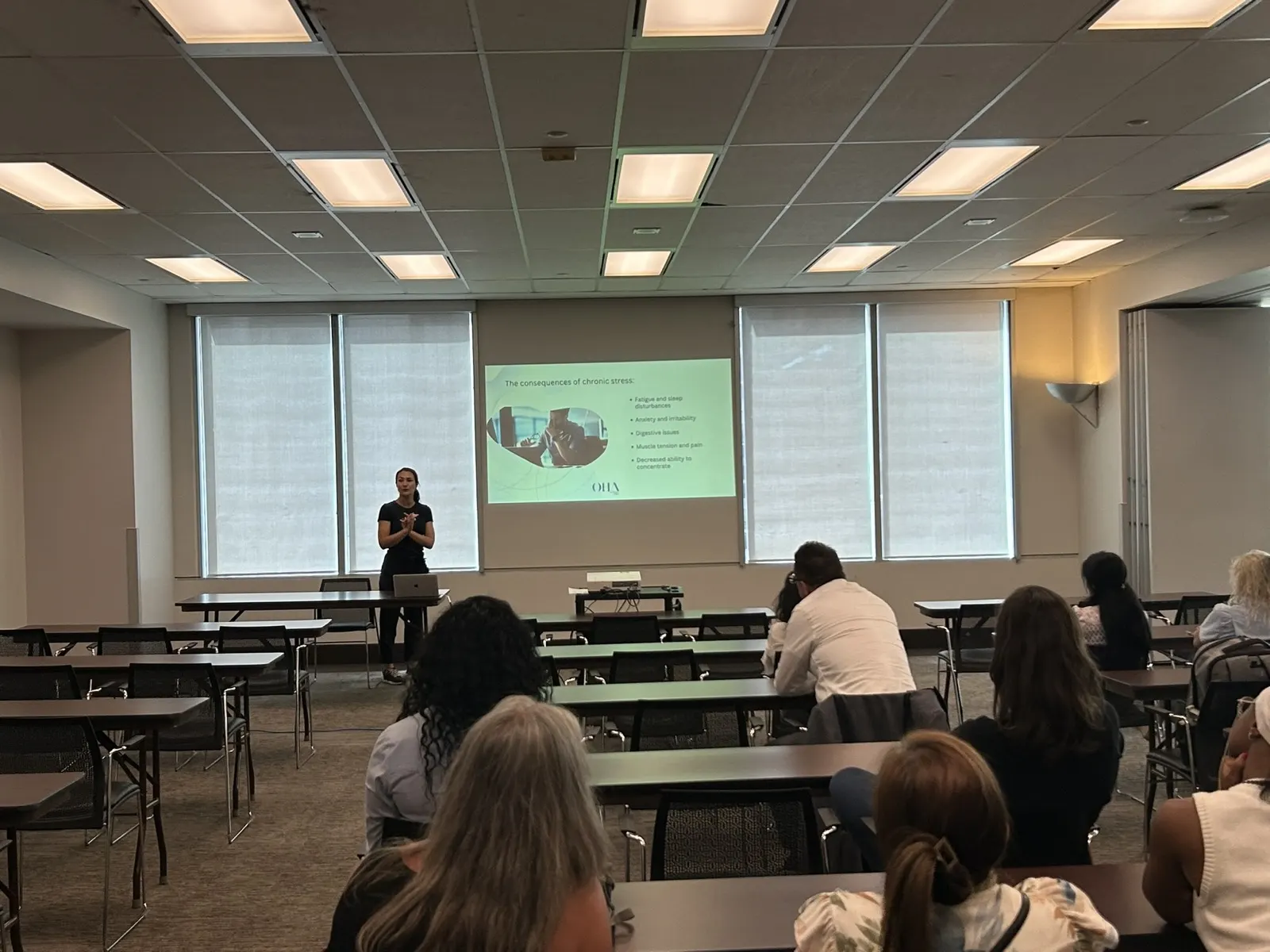
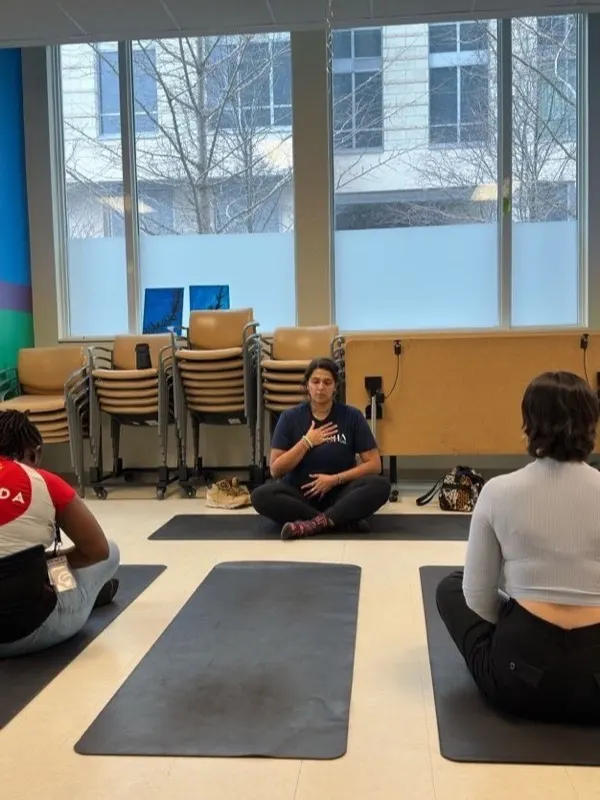
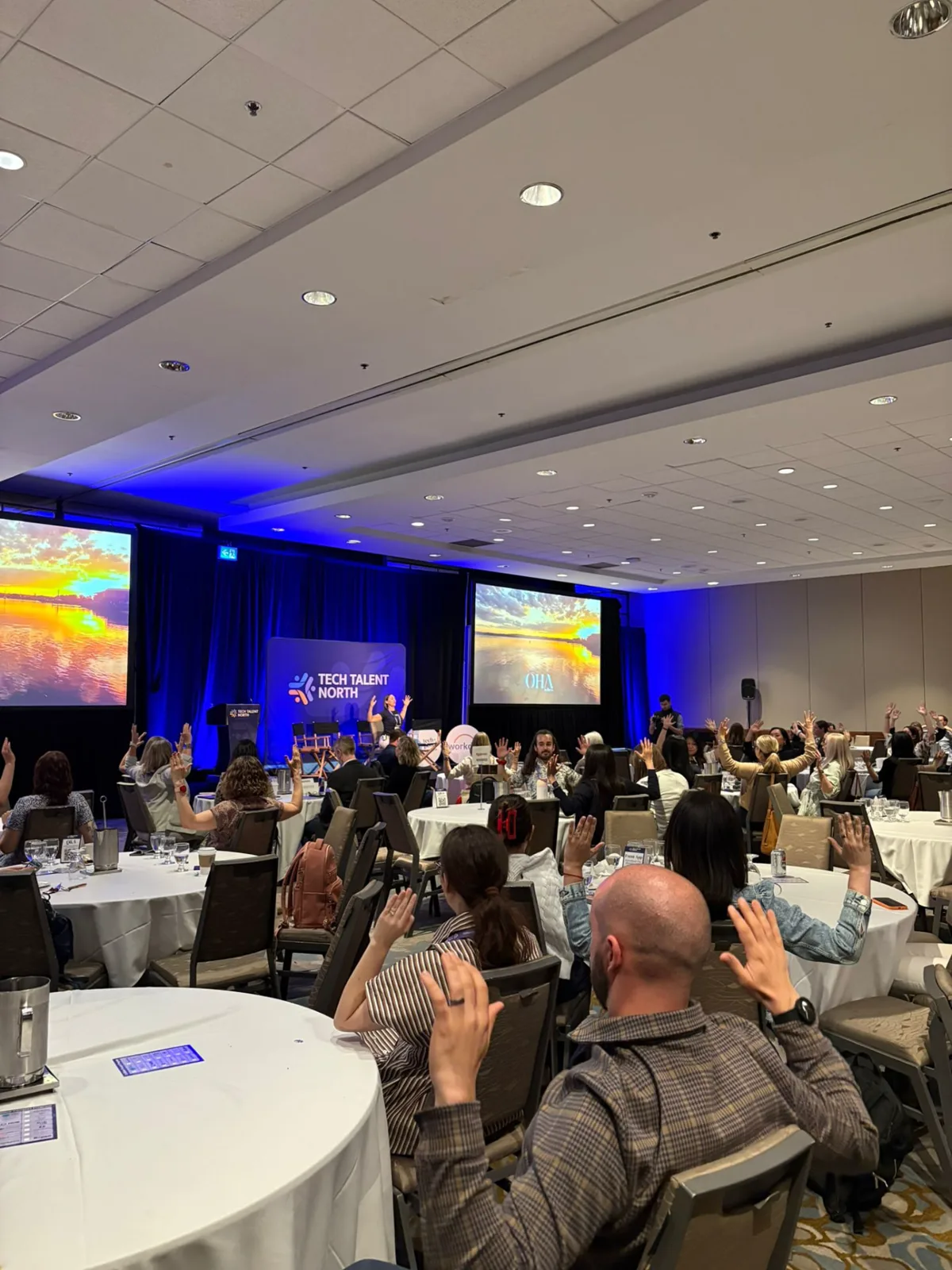
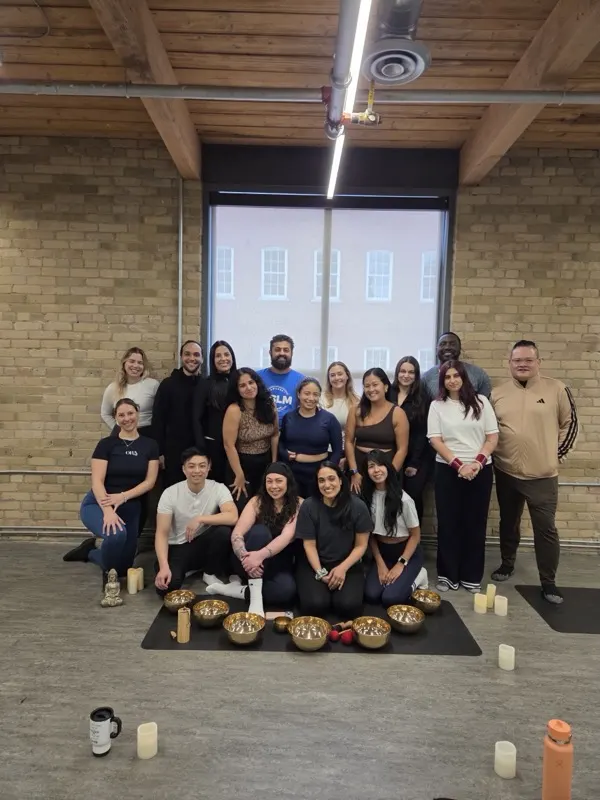
Each layer does one job well and misses the others. A session gives people a real pause and a team a shared experience; on its own it does not change how much work lands on them. OHA leads sessions in your office in English or French, as a wellness workshop for employees or a breathwork and meditation session.
Programs and benefits give people somewhere to go. An EAP supports an individual; it does not change the work around them. A series gives the calendar a rhythm: OHA's page on an employee wellness program in Toronto describes a monthly or quarterly series for the same team. To compare vendors, read the buyer's guide to choosing a corporate wellness program in Canada; for what the trials found, read whether employee wellness programs work.
Work design decides how much capacity people have left to use any other layer. WHO lists excessive workloads or work pace and understaffing among the risks to mental health at work. Manager practice carries the change day to day: WHO recommends training managers to recognize and respond to team members who are in emotional distress.
Five Loads quick check · 1 minute
Find the load consuming your team's capacity.
Five statements, about a minute. See all five loads side by side. Before you add a layer, look at the work around it. Answer for your own week or your team's: how often is each of these true?
Statement 1 of 5
Which layer is missing in your organization?
Ask four questions, and start where the answer is no. Could your people attend a shared session on work time this quarter? Is there a program or benefit, such as an EAP, that people know about and can use in the language they work in? Can a team name one thing about how its work is set up that changed because of what it said? Can a manager say what they would do if a team member told them the load is too heavy?
If the answers are yes, yes, no, no, that is not a failure of effort. Sessions and benefits are easy to buy and to count, while changing a workload or a manager's habits means a decision that has an owner.
How do you start in a month?
Start with one shared session, one measure and one change made with managers. In week one, hold one session for a team to open the conversation. In week two, take one measure of where the load sits: the quick check above is one way, and a Capacity Diagnostic across a whole team is another. In weeks three and four, agree one change with the team's managers, such as one approval step dropped or one meeting removed, and put the date of the next measure in the calendar.
Keep the scope small on purpose. One team, one load and one change give you something to compare against, which a company-wide launch does not.
How do you promote wellness in the workplace?
Hold it on work time and have managers attend. A session a manager skips tells the team it is optional, and one placed after hours tells them it is a favour. Say plainly in the invitation what the session is, a pause led by a facilitator, and what it is not, which is a medical service or a performance test.
Offer it in English and French where your teams work in both, send the invitation through managers rather than a mass email, and ask one question afterwards: what changed in your week? Use the answers when you plan the next session.
How do you build a culture of wellness in the workplace?
A culture of wellness lasts when it becomes a routine of measuring, acting and measuring again, not a calendar of events. In OHA's Capacity Circle™, a 90-day cycle, a team's load is measured, the load that weighs most is acted on with managers, and the same measure is taken again at day 90. Sessions are the door into the cycle; the cycle is the relationship.
If you want an outside framework, the Mental Health Commission of Canada describes the National Standard of Canada for Psychological Health and Safety in the Workplace, launched in January 2013, as a set of voluntary guidelines and practical resources.
What OHA does about this
OHA starts where your answers point. Wellness sessions give a team a real pause, led in your own office. Sustainable human performance starts with a Capacity Diagnostic, built to measure the Five Loads, and moves into 90-day cycles designed to help leaders act on the load that weighs most, then measures again. Send OHA the layer you think is missing and the team you would start with, and ask for a quote within one business day. See sustainable human performance at OHA.
Sources
- Statistics Canada, Work-related stress most often caused by heavy workloads and work-life balance, 19 June 2023 (April 2023 data).
- World Health Organization, Mental health at work, fact sheet, 15 September 2026.
- Mental Health Commission of Canada, Workplace Standard, 2013 (launched January 2013).