Workplace wellness challenges that protect the week, not fill it
Workplace wellness challenges help when they fit inside the working day and run by team, not by ranking. Four rules, 13 ideas and a four-week plan.
OHA Team, OHA Wellness
Published · Updated · Practice · 6 min
The short answer
A good wellness challenge takes place in work time, is shared by the team and not ranked, is optional and private, and lasts two to four weeks. If it asks people for more time, change the idea.
On this page
Workplace wellness challenges help when they fit inside the working day, are shared by the team and not ranked, and ask nothing of anyone's evening. A challenge that adds a task to a full week is one more thing to fall behind on, however well meant.
This post is for a committee or an HR lead choosing a challenge. It covers why some challenges backfire, four rules for the ones that help, 13 workplace wellness challenge ideas that ask for less and not more, how to run one in four weeks, and how to tell whether it helped.
Why do some workplace wellness challenges backfire?
Because they add work and turn a private matter into a public score. A leaderboard can favour the people who have the most free time, and it shows everyone else where they stand. A step count or a weight goal makes bodies the thing being measured, and not everyone on a team can or wants to take part on those terms.
Other features cause trouble in the same way. Tasks done after hours turn a benefit into homework. An app to log every day makes the challenge one more system to maintain. A prize can make an invitation feel like pressure, most of all for the person who is already behind. Each of these asks the people with the least spare capacity to give more of it.
Step, weight and food challenges are not forbidden. If your team wants one, make it optional and private, keep any scoreboard from naming individuals, and leave room for other ways of taking part, such as time outside the building.
What makes a wellness challenge help and not add to the load?
Four rules cover most of it. A challenge built on them is designed to take something off the week or protect time in it.
First, it happens on work time. If people have to find the minutes in the evening, it is a cost and not a benefit. Second, it is team-based. The team shares one goal, such as a number of protected lunches taken, and nobody is ranked against a colleague. Third, it is opt-in and private. Joining is a choice, nobody announces who did what, and no one has to explain why they sat out. Fourth, it is short: two to four weeks, so it stays light and ends on a known date.
Add one test before you launch. Ask what the challenge takes off the week. If the answer is nothing, and the idea needs people to find extra time, change the idea. A manager who takes part first, in plain view, sets the tone.
What are good workplace wellness challenge ideas?
Good workplace wellness challenge ideas protect recovery, remove a piece of work, connect people or teach one small practice, and each fits inside the workday. Here are 13 ideas in four groups. Pick one or two, not all of them.
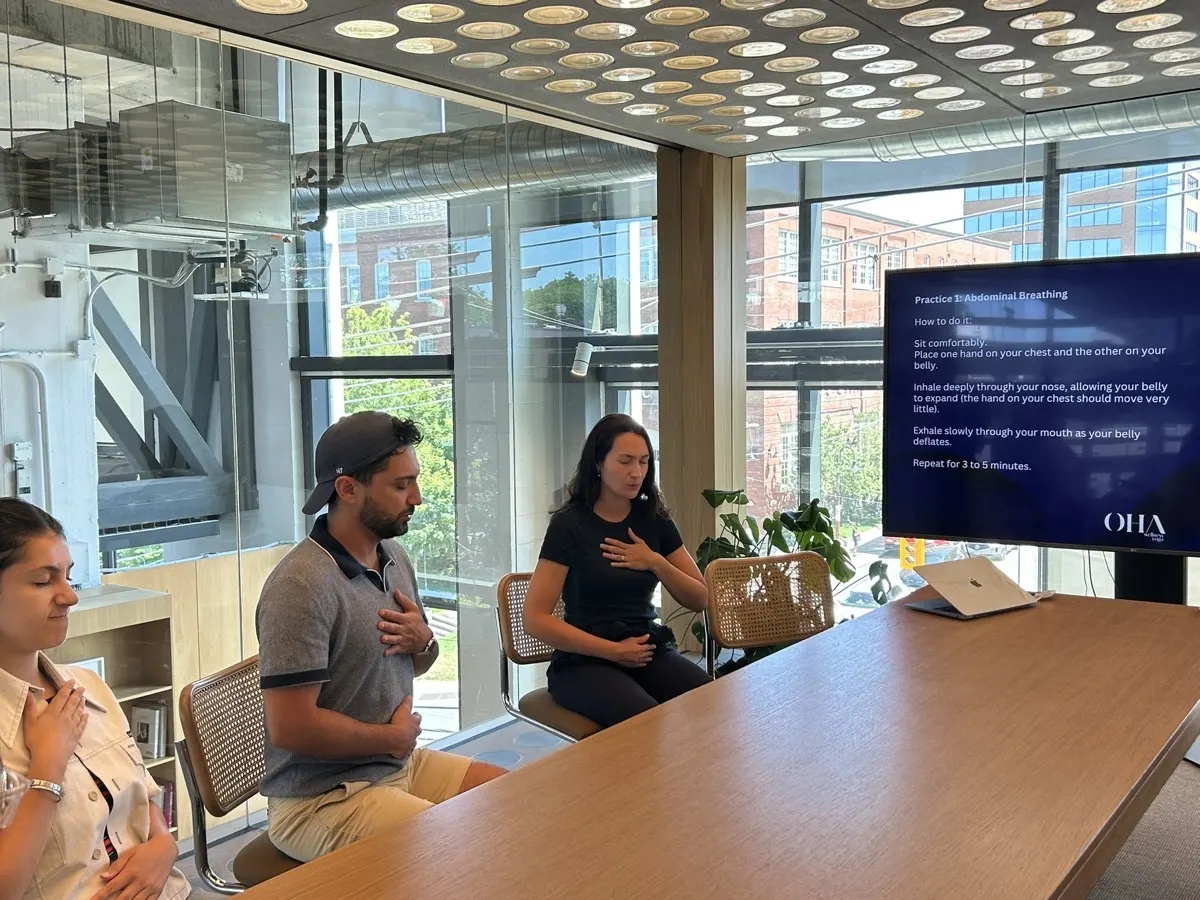
Recovery. A protected lunch: for two weeks, nobody books a meeting over the midday hour and people step away from their desk. A no-meeting block: one fixed half day a week with no meetings, kept by the whole team. A five-minute breathing break: the team stops together once a day, using one of the five-minute breathing exercises. A screen-free ten minutes after lunch, for anyone who wants it, with no phones on the table.
Workload. One meeting removed per week: each person names a standing meeting that could be shorter or dropped, and the manager acts on at least one. An email-free afternoon: one afternoon a week with notifications off and an agreed way to reach someone urgently. A stop-doing list: the team writes down tasks nobody can say a reason for, and removes one each week.
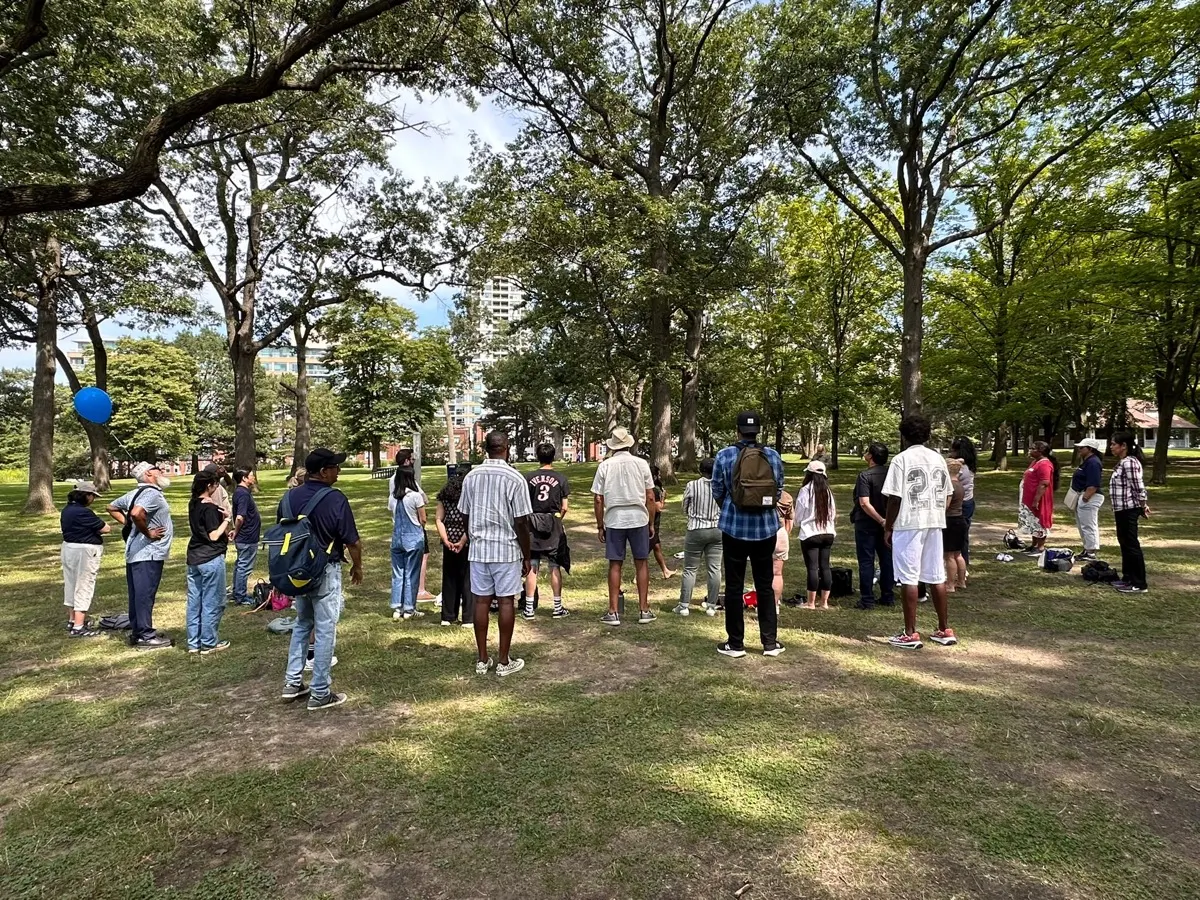
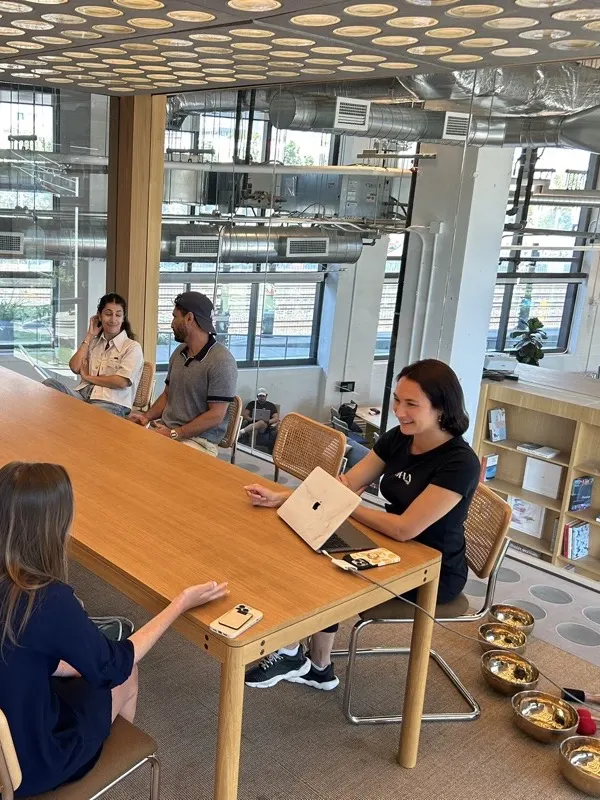
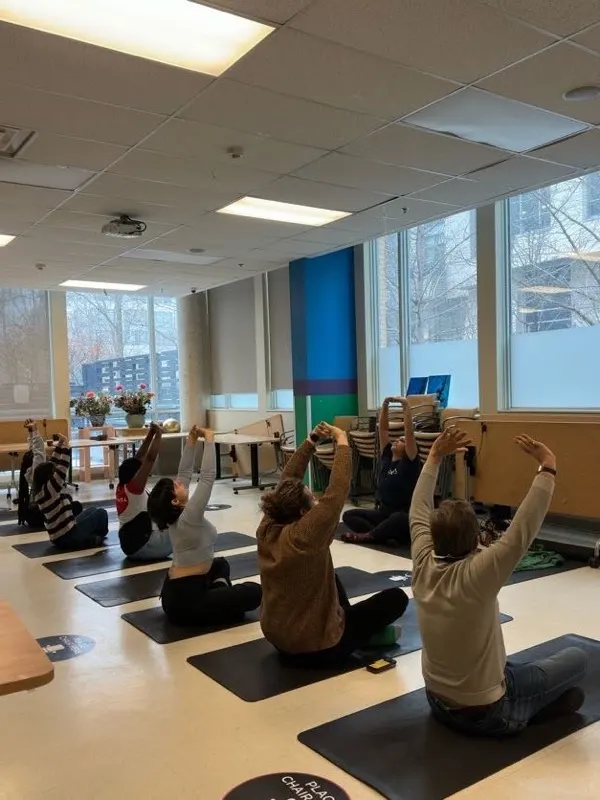
Connection. A walking one-to-one: a catch-up held on foot, around the block, in work time, instead of in a room. A thank-you swap: each person writes one specific note to a colleague each week, naming what the person did. A shared session: the whole team takes a guided stretch or breathing break together, led by a facilitator, so that nobody does it alone.
Learning. One practice a week: the team tries one short technique, such as a breathing pattern or a seated stretch, and says on Friday whether to keep it. A lunch and learn on recovering during the workday. A skills swap: two colleagues teach each other something small, 20 minutes each. For formats a team will actually attend, our post on employee wellness ideas a team will attend goes further.
How do you run a workplace wellness challenge in four weeks?
Choose one idea with the team, name a sponsor, and tell people it is optional and that nobody is tracked by name. Then run it in four short steps, each with one job.
Week one: start with the easiest version of the idea, and have the sponsor go first. Week two: take five minutes at the team meeting to ask what is working and what is in the way. Week three: adjust. If part of the idea is not fitting, drop that part and keep the rest. Week four: finish on the date you announced, ask what to keep, and thank people for taking part.
The calendar matters. Avoid starting a challenge in a heavy week: check the team's load first. If your team wants a fresh start in the new year, our January team wellness kickoff is a shared session that can launch the challenge your team has already planned.
How do you tell whether a challenge helped?
Ask the team, and look at the work as well as the mood. Put the same three questions to everyone before the first week and after the last, with answers kept anonymous: did the challenge take time or give it back, would you keep it, and what should we stop doing. Then look at what the calendar shows: meetings removed, lunches taken, afternoons kept free.
Never weigh or measure people's bodies to judge a challenge, and do not publish who took part. Participation alone tells you little. A person who sat out may have been the one with the most to protect.
If the same pressure comes up in the answers, the cause may sit in the work and not in people's habits. A challenge does not change a heavy workload by itself, so pair it with one change to the work. Sessions led by a facilitator, such as a breathwork and meditation session, can open the conversation. They do not replace it.
What OHA does about this
OHA leads wellness sessions for teams in your own office, in English or French, led by OHA practitioners trained in the OHA method: guided breathing, seated movement and a workshop on stress at work. A shared session can open a challenge or close it. See how a half day or a full day can run on our page for wellness days for employees, then tell us the team and the date. You get a quote within one business day.