How to start a workplace wellness committee that changes the work
A workplace wellness committee changes something when it has a written mandate, members from different roles and a plan for the year. A mandate to copy, who sits on it, how often it meets and a plan by quarter.
OHA Team, OHA Wellness
Published · Updated · Practice · 6 min

The short answer
Give the committee a five-line mandate, six to ten members from different roles, a leadership sponsor and a budget line, then a plan by quarter: listen, pick one or two priorities, hold a shared session, report back.
On this page
- How do you start a workplace wellness committee?
- How is a wellness committee different from the health and safety committee?
- Who sits on the committee, and how often does it meet?
- What mandate should a wellness committee have?
- What does the committee do in its first year?
- What are good wellness committee ideas that are not more events?
- What OHA does about this
- Sources
To set up a workplace wellness committee that changes something, give it a written mandate, six to ten members from different roles, a leadership sponsor and a budget line, then a plan for the first year.
This post is for the person who has just been asked to start the committee, often in HR. It covers how the committee differs from the health and safety committee, a five-line mandate you can copy, who sits on it and how often it meets, a plan by quarter, and where outside sessions fit. It is information, not legal advice.
How do you start a workplace wellness committee?
Start with the mandate, not the activities. Gather the leader who will sponsor the committee and a few volunteer colleagues, write in five lines what the committee decides and what it recommends, then announce it to the whole team with the date of the first meeting.
The World Health Organization says action to address mental health at work should be done with the meaningful involvement of workers and their representatives. A wellness committee that listens to the team before it acts applies that idea on a small scale: it asks first and proposes second.
How is a wellness committee different from the health and safety committee?
The health and safety committee is set by law; a wellness committee is voluntary and does not replace it.
In Ontario, CCOHS lists the joint health and safety committee as mandatory for workplaces of 20 or more workers under sections 8 to 11 of the Occupational Health and Safety Act, and says at least half of its members must represent workers.
In Quebec, the CNESST says a comité de santé et de sécurité must be in place in establishments of 20 or more workers. Our post on the joint health and safety committee in Ontario sets out what the law gives that committee.
Keep the two committees separate. If your workplace has a health and safety committee, tell it the wellness committee exists and pass along anything about workload or psychosocial risk. For what the law requires of your organization, call the regulator or an employment lawyer.
Who sits on the committee, and how often does it meet?
Aim for six to ten members from different roles and sites, plus a leadership sponsor. Where people work in English and French, include members from both languages and hold the meetings in both.
The sponsor does not run the committee: the sponsor clears obstacles such as budget, protected time and the leadership response. Co-chairs, for example one employee and one manager, help the committee avoid looking like an HR project.
For rhythm, a 45-minute meeting each month on work time, with a three-item agenda, is enough to start. Committee time counts as work time.
What mandate should a wellness committee have?
Five lines are enough, as long as they are written before the first meeting. Here is a mandate outline in our own words, ready to copy and adapt.
Mandate outline. 1. Purpose: why the committee exists and what it wants to change about the team's work, in one sentence. 2. Scope: who it represents (every site, every team, including people on variable schedules) and what it leaves to other committees, including the health and safety committee. 3. Decision rights: what it decides alone, such as its agenda and the choice of sessions within the budget, and what it recommends to leadership, such as a change to workload, schedules or practice. 4. Budget: the year's budget line and who approves it. 5. Reporting: who the committee reports to, on what date each year and in what form, for example a one-page note read at the leadership meeting.
How to use it. Write it with the members, have the sponsor approve it, then post it with the list of members. Read it again at the end of the year: a mandate nobody rereads stops being used.
What does the committee do in its first year?
One step a quarter: listen, choose, act, report. The plan fits on one page and leaves room for the unexpected.
Quarter one: listen. Send a short survey to the whole team, not a sample of volunteers, and share the results by team, never by person, within two weeks. Our employee wellbeing survey questions cover workload, recovery and support.
Quarter two: choose. Pick one or two priorities that touch the work itself, such as meetings that pile up or breaks that get skipped, and name an owner and a date for each. Quarter three: act, with the managers involved, and note what changes. Quarter four: report to the whole team on what changed, what did not and why, then run the same survey again to compare.
Every quarter also includes one shared session, on work time, chosen from what the team said. It shows the committee exists; the priorities are what change the work.
What are good wellness committee ideas that are not more events?
The ones that lighten the work instead of adding to the calendar. Eight ideas: a protected lunch hour with no meetings; one meeting-free half day a week; a shorter default meeting length; an email-free afternoon after a peak period; a monthly workload conversation between each manager and their team; removing one approval step that slows everyone down; recovery time set aside after a project; a standing item on each team's agenda about what can be set aside.
For activities, see our employee wellness ideas a whole team will attend and choose the ones the team asked for in the survey.
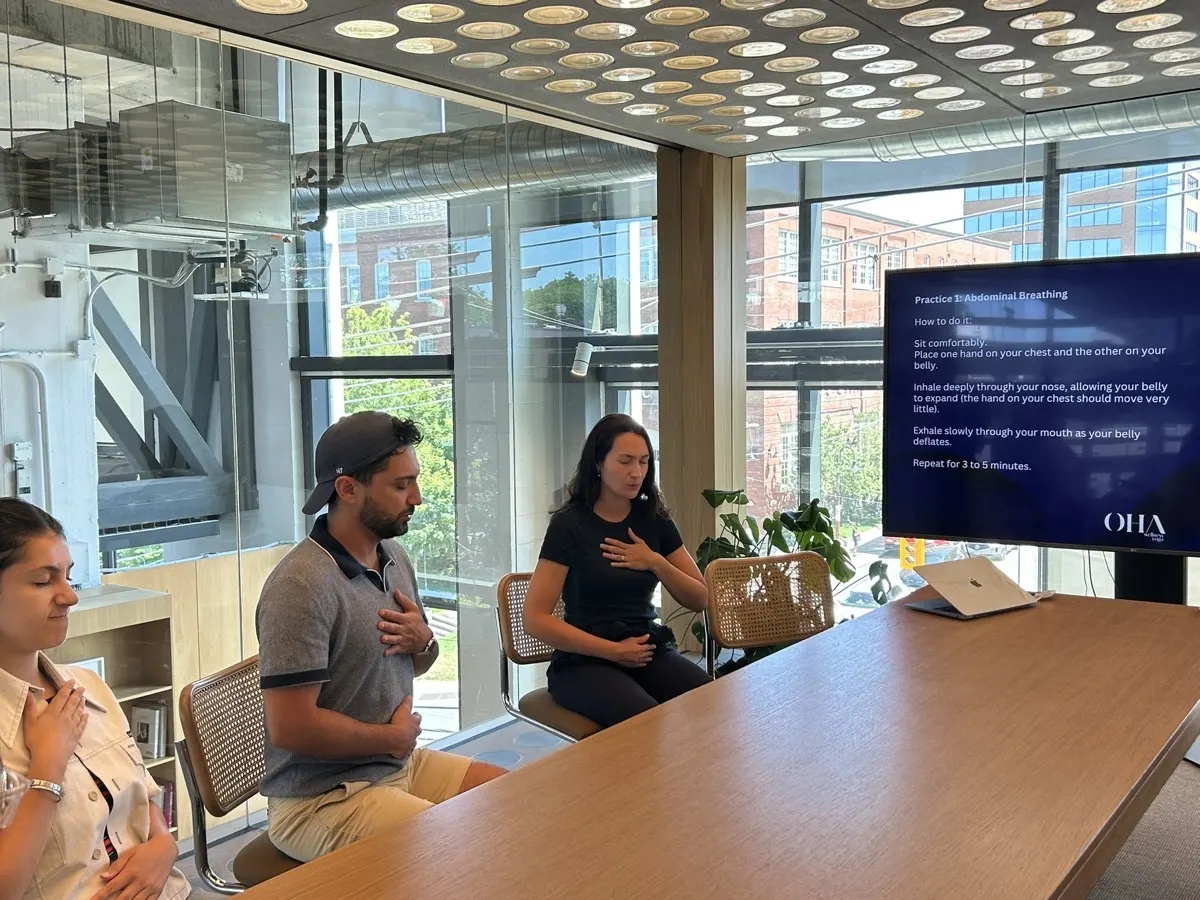
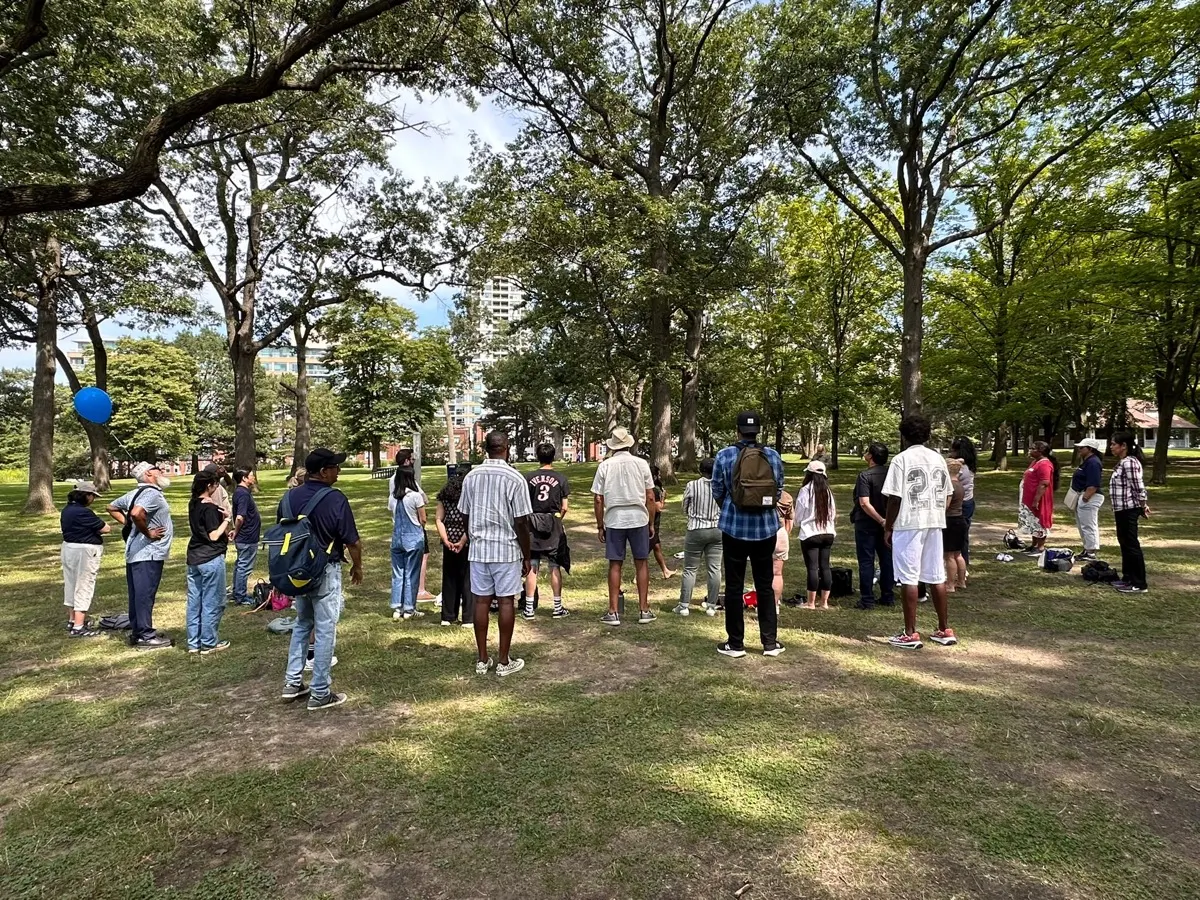
Outside sessions are the door, not the plan. In Toronto and the GTA, OHA plans and leads sessions from 30 minutes to two hours for 10 to 50 people, in English or French. Our page on wellness days for employees shows how they fit together, and the one on an employee wellness program in Toronto shows the whole offer.
What OHA does about this
Our team plans and leads sessions for your committee and for the whole team, in your office or a venue in Toronto and the GTA, in English or French. They are designed to open the conversation; the committee's priorities do the rest. To start, send us the date, the group size and the language, and you get a quote within one business day.
Sources
- World Health Organization, Mental health at work (fact sheet), 15 September 2026.
- CCOHS, Health and Safety Committee: What is a Health and Safety Committee?, 2024 Revised 30 August 2024.
- CNESST, Mettre en place un comité de santé et de sécurité, 2026 (in French).